
Back to: ZOOLOGY 500 Level
Welcome to class!
Hi there, superstar! I hope you’re feeling focused and ready because what we’re about to learn today is something that will make your Zoology journey more exciting and practical. Every great ecologist isn’t just good at observing nature—they’re also skilled at asking the right questions and designing the right experiments. By the time we’re done with this class, you’ll know exactly how to plan ecological studies that matter. Let’s get into it together!
Designing Ecological Experiments And Surveys
Meaning of Ecological Experiments and Surveys
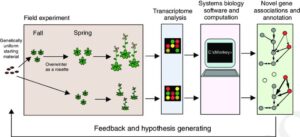
Ecological experiments and surveys are methods scientists use to study living organisms and how they relate with their environment. While experiments involve testing a specific idea under controlled conditions, surveys are used to gather data by observing and recording what is naturally happening in the environment. Both are essential tools for collecting scientific evidence that helps us understand nature better.
Planning Your Research Question
Every experiment or survey begins with a clear question. What exactly do you want to find out? For example, you might ask: “Does soil moisture affect termite activity in a savannah?” or “How many species of birds live around a rice farm in Lafia?” The question must be specific, measurable, and relevant to your ecological interest.
Choosing a Suitable Study Area
Next, you decide where to conduct your work. It must be a location that suits your topic and where you can safely access the organisms or habitats you want to study. If you’re studying water quality and fish population, for example, you might pick a slow-moving river or a fishpond near a community.
Selecting the Right Method
There are many methods depending on your goal. For experiments, you might change one condition—like temperature or light—and see how it affects a plant species. For surveys, you can use tools like quadrats to estimate population sizes, line transects for mapping vegetation, or camera traps to monitor animal behaviour.
Collecting and Recording Data
Data collection must be consistent and accurate. You should write down every observation in a field notebook or digital device, using tables, codes, or sketches to stay organised. Note the date, time, weather, and other conditions, because these factors can influence results.
Analysing and Interpreting Results
Once you have your data, it’s time to study it carefully. Look for patterns, trends, and any unexpected outcomes. You can use graphs, charts, or statistics to help make sense of what you’ve found. This is the stage where your observations begin to tell a story.
Making Conclusions and Recommendations
Based on what the data shows, you can now draw a conclusion. Did your results support your original idea? What new things did you discover? You can also make recommendations—maybe to farmers, policymakers, or fellow researchers—depending on your findings.
Real-Life Example
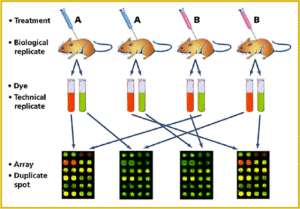
Chinonso, a final-year Zoology student at the University of Port Harcourt, wanted to study how urban noise affects bird activity. She selected three different locations—one near a market, one in a quiet park, and one close to a school. She visited each location at the same time daily and recorded bird calls. Her survey showed that birds were less active in noisy areas. With this, she suggested preserving quiet green spaces in cities to support urban biodiversity.
Summary
- Ecological experiments test specific questions, while surveys observe and record patterns in nature.
- A good study starts with a clear question, suitable location, and appropriate method.
- Data collection must be accurate, followed by proper analysis and conclusion.
- These methods help scientists make evidence-based decisions about the environment.
Evaluation
- What is the difference between an ecological experiment and a survey?
- Why is it important to plan your research question before starting?
- List two tools or techniques used in ecological surveys.
- Suggest a simple ecological question you could study in your area.
You are doing an incredible job! Each lesson you master is shaping you into the kind of scientist the world needs—curious, responsible, and intelligent. Keep going, keep growing, and never forget—Afrilearn believes in you and is cheering you on every step of the way. You’ve got this!